|
CUBiC (SRC/DARPA):
This center,
running from 2023-2027, under the leadershiop of Prof. Bergman of Columbia
university, seeks to develop new generations of high capacity wireless,
wireline, and optical communications networks. Rodwell group will, under this
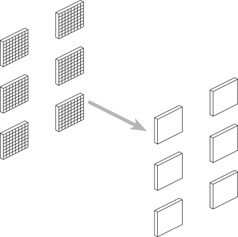
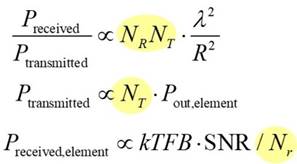
program, develop high-capacity, massive-scale CMOS mm-wave transmitter and
receiver arrays in the 70 GHz and 140 GHz bands, seeking breathrough
combinations of range, data rate, and link robustness (margins against
failure by attenuation or beam blockage).
IC design, System Design.
RINGS (NSF):
In this
program, in collaboration with Prof. Madhow, we seek to develop high capacity
mmwave communications links using massive scale CMOS transceivers.
IC design, System Design.
4D-100 (NSF):
In this program,
in collaboration with Profs. Madhow and Buckwalter, we seek to develop CMOS
ICs, modules, and systems for 140 GHz imaging radar.
IC design, System Design.
FUSE (NSF)
In this program
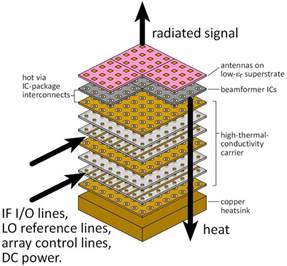
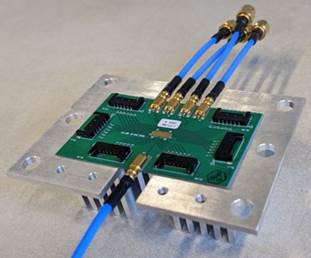
we seek to develop low-cost packaging technology for mm-wave CMOS arrays.
IC design, System Design.
ITERA (DARPA/Intel)
In this program
we seek to demonstrate high-power and high-efficiency 100-200 GHz power
amplifiers and low-noise 100-200 GHz amplifiers in Intel 16, and advanced
RF-optimized finFET technology. Futher program phases may address full
arrays, including package integration
IC design, System Design.
ELGAR (DARPA/Teledyne)
The ELGAR program seeks to develop IC
technologies for 220 GHz phased arrays. UCSB's role, in collaboration with
Teledyne, is to demostrate record-efficiency 220 GHz power amplifiers.
IC design, System Design.
Dielectric waveguide interconnects
(SRC)
In this program
we seek to develop technologies for high-capacity, 1-10 meter range
dielectric waveguide interconnects for digital systems.
IC design, Electromagnetic
design.
CA DREAMs program
This new
industry-university program will develop US infrastructure in high-frequency
semiconductors and systems. Rodwell group's efforts may include THz
transistors, mm-wave ICs, and mm-wave arrays.
transistors, IC design, system
design
|