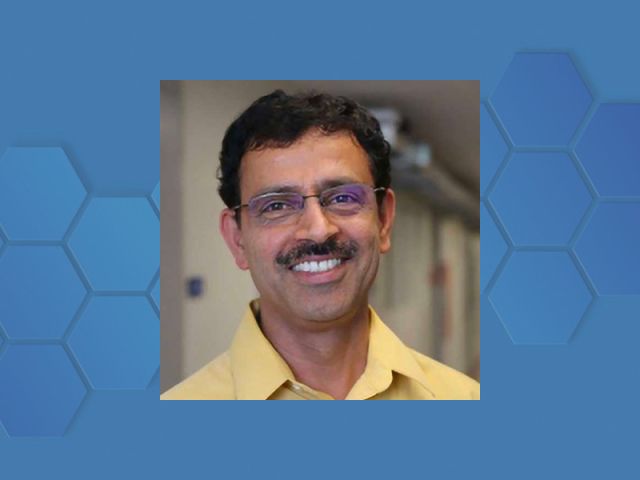
UCSB Electrical and Computer Engineering Chair and Professor, Jerry Gibson, has been selected as member of the distinguished judging panel for the Interdigital Innovation Challenge engineering competition.
The InterDigital Innovation Challenge (I²C) is an engineering competition that aims to discover breakthroughs in advanced wireless technologies. The competition is sponsored by InterDigital and the University of California, San Diego division of the California Institute for Telecommunications and Information Technology (Calit2).
The I²C is open to individuals or teams from any North American college or university. Participants are required to submit a proposal explaining the technical and commercial viability of their idea in the area of radio signal propagation and processing, radio modem innovations, radio network management and systems innovations, compression and data management techniques, energy improvement in radio processing and/or wireless and network virtualization.
The submissions will be evaluated by a seven-member judging panel from academia and industry, and $175,000 in cash prizes will be awarded to the top entries, including $100,000 for the winning team or individual.
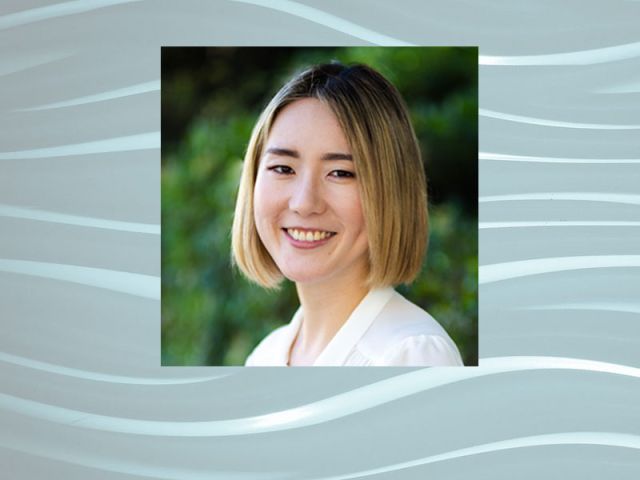
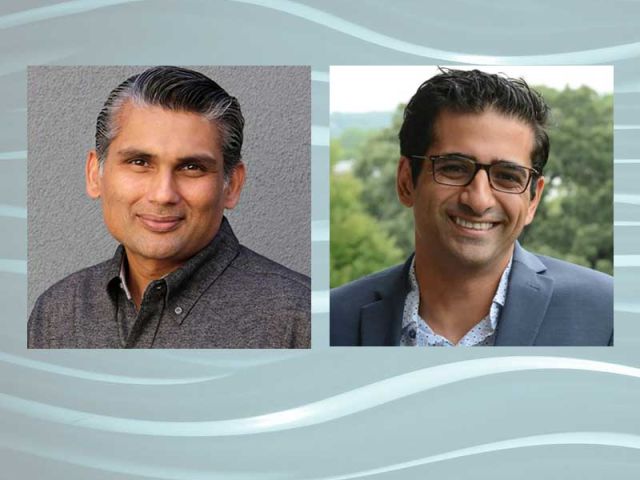
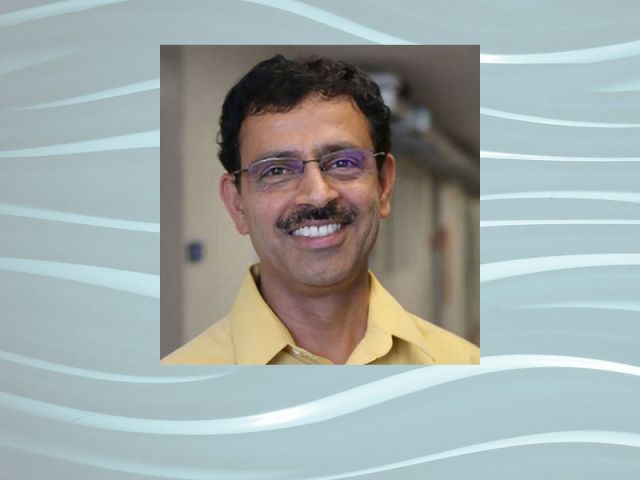
The judging panel also includes Lawrence Larson, Dean, Brown University School of Engineering; Dipankar Raychaudhuri, Professor, Rutgers School of Engineering and WINLAB Director; Arogyaswami Paulraj, Professor Emeritus, Stanford University; Hamid Jafarkhani, Professor, UC Irvine Engineering and Director of the Center for Pervasive Communications and Computing; Naresh Soni, Chief Technology Officer, InterDigital; and Martha Dennis, telecommunications entrepreneur and venture capitalist.
Steven P. DenBaars, a prominent faculty member in the College of Engineering at UC Santa Barbara, is among the 66 new members elected today by the National Academy of Engineering.
Election to the Academy is among the highest professional distinctions accorded to an engineer. Membership honors those who have made outstanding contributions to “engineering research, practice, or education, including, where appropriate, significant contributions to the engineering literature,” and to the “pioneering of new and developing fields of technology, making major advancements in traditional fields of engineering, or developing/implementing innovative approaches to engineering education.”
DenBaars, a professor of electrical and computer engineering and of materials, was recognized for his contributions to gallium nitride-based materials and devices for solid state lighting and displays.
UC Santa Barbara (full press release)
Transphorm lays the groundwork for use of gallium nitride for power conversion technology
Transphorm Inc., based in Goleta, has announced the qualification of its first product that may cut energy waste by 20 percent. The products are variations of the 600-volt diodes that use its patented gallium nitride technology.
The idea began as a dream between a UCSB professor and a student. Nineteen years later, Umesh Mishra and Primit Parikh are using a relatively unexploited source to revolutionize power conversion.
Recent developments in hybrid circuits by Electrical & Computer Engineering and Materials researchers are profiled in nanotechweb.org article.
The team led by Professor Strukov is looking at ways to perform low-precision analog information processing with hybrid circuits that combine single conventional CMOS chip and layer(s) of quasi-passive resistive switching (“memristor”) nanoscale crosspoint devices.
The research “High Precision Tuning of State for Memristive Devices by Adaptable Variation-tolerant Algorithm” was published in Nanotechnology, Volume 23, Number 7.
Santa Barbara-based Transphorm was featured in ZDNet this week in an article that profiles the company’s new gallium nitride transistor technology. ECE Professor and Transphorm CEO, Umesh Mishra says his company’s technologies cause less energy to be wasted.
ZDNet Summary: The California startup has come up with an alternate materials approach for power conversion technologies that would let them run cooler, resulting in less waste.
Professor Kokotovic was elected in appreciation for his scientific merits and achievements as a Foreign Member of the Russian Academy of Sciences at the December 2011 Annual Meeting of the RAS.
The prestigious Russian Academy of Sciences was founded by Peter the Great. The RAS has approximately 250 Foreign Members and has 11 scientific branches, 14 regional centers, three territorial branches, and numerous commissions, committees and councils.
Kokotovic is also a member of the National Academy of Engineers, an IEEE Fellow, and a recipient of the IEEE James H. Mulligan, Jr. Education Medal.
Kiplinger’s Personal Finance has named UC Santa Barbara to its 2012 list of 100 best values in public colleges and universities. The annual ranking cites four-year schools that combine outstanding education with economic value.
UCSB is ranked number 17, a jump from number 34 in last year’s rankings.
According to Hernández’s bio on the Congressional Hispanic Caucus Institute’s (CHCI) website, Engineer and astronaut José Hernández has been a lifelong advocate of Latino youth pursuing their dreams and offers his own success story as evidence that hard work and education offer lasting rewards.
Hernández, who was a field laborer as a child, was the first person to use Spanish language in space through his tweets during the 2009 Space Shuttle mission STS-128. He founded the Reaching for the Stars Foundation to provide scholarships to students pursuing careers in science and engineering. His foundation mirrors the assistance he received as a student through the Mathematics, Engineering, Science Achievement program, which helps students from educationally disadvantaged backgrounds attain degrees in science, technology, engineering or math (STEM) fields.
Hernández has also announced his candidacy in October for Congress in California’s 10th district.
He received his M.S. in ECE in 1986 from the University of California, Santa Barbara.
CHCI 2011 Hispanic Heritage Awards
UC Santa Barbara ranks as 7th in the world for top research universities in the new 2011/2012 Leiden Ranking, according to a report this week by University World News. This places UCSB in the Top 10 research universities globally, above UC Berkeley, Carnegie Mellon, and Yale.
The Leiden Ranking is a new university ranking system that uses a sophisticated set of bibliometric indicators to rate scientific performance to establish the world’s top 500 research universities. Leiden aims to provide highly accurate measurements of the scientific impact of universities and of universities’ involvement in scientific collaboration.
“Robotic Renaissance: The Non-Robotic Robot”
In popular parlance, the term “robotic” verges on the insulting. It implies uninspired, unthinking and repetitive. Yet at the same time, robots themselves are cool—striding through popular culture in science fiction and reality shows, alongside (or in place of) military troops, serving as science ambassadors in classrooms or pluckily plodding though nuclear disasters in Japan.
At UC Santa Barbara, the fluidity and diversity of real life inspires the approach to this new-old technology, bridging the divide between “clone” and “cool.” Many robotics projects seem to draw more from the menagerie than the hardware store, with rats and mice, dogs and dragonflies, even maple seeds and bacteria, influencing the design of hardware and software, and how robotics is taught in academia.
Professor Byl was interviewed about her UCSB Robotics Lab and research and Hespanha about the multidisciplinary research efforts at the Center for Control, Dynamical Systems and Computation.
Convergence: the Magazine of Engineering and the Sciences at UCSB